Monday, 2 April 2018

Meaningful commit messages

A short note, your git commit messages should start with "Fix" or "Add" instead of "Fixed" or "Added", which fits well in :

When merged/applied, this patch/commit will "<commit message>"

e.g. When merged, this commit will "fix the photo-viewer crash"

Sunday, 17 September 2017

LinuxChix Meet up experience!

Hi all,

Today I got an opportunity to celebrate Linux's 26th anniversary (17th September 1991) with the LinuxChix India team (http://india.linuxchix.org/).

I gave a talk on:

  • Unix, GNU, and  Linux's history 
  • And shared my experience using Linux, Ubuntu, and Kubuntu


It was a great interactive session. We shared some thoughts about:

  • SSH's working
  • Linux distributions
  • Flavours of Ubuntu
  • Kubuntu, KDE Plasma 5 and KDE frameworks, 
  • Linux file system 
  • Kernels and its role
  • Various Linux Commands

I would like to thank Shivani Bhardwaj and Priyal Trivedi for organising the meetup and Amit Kumar for introducing me to the team.

Link to the slides of my talk:
https://drive.google.com/file/d/0B9XiOPGG2l_vcTNNcEVhVjV1RnM/view?usp=sharing

Wednesday, 16 August 2017

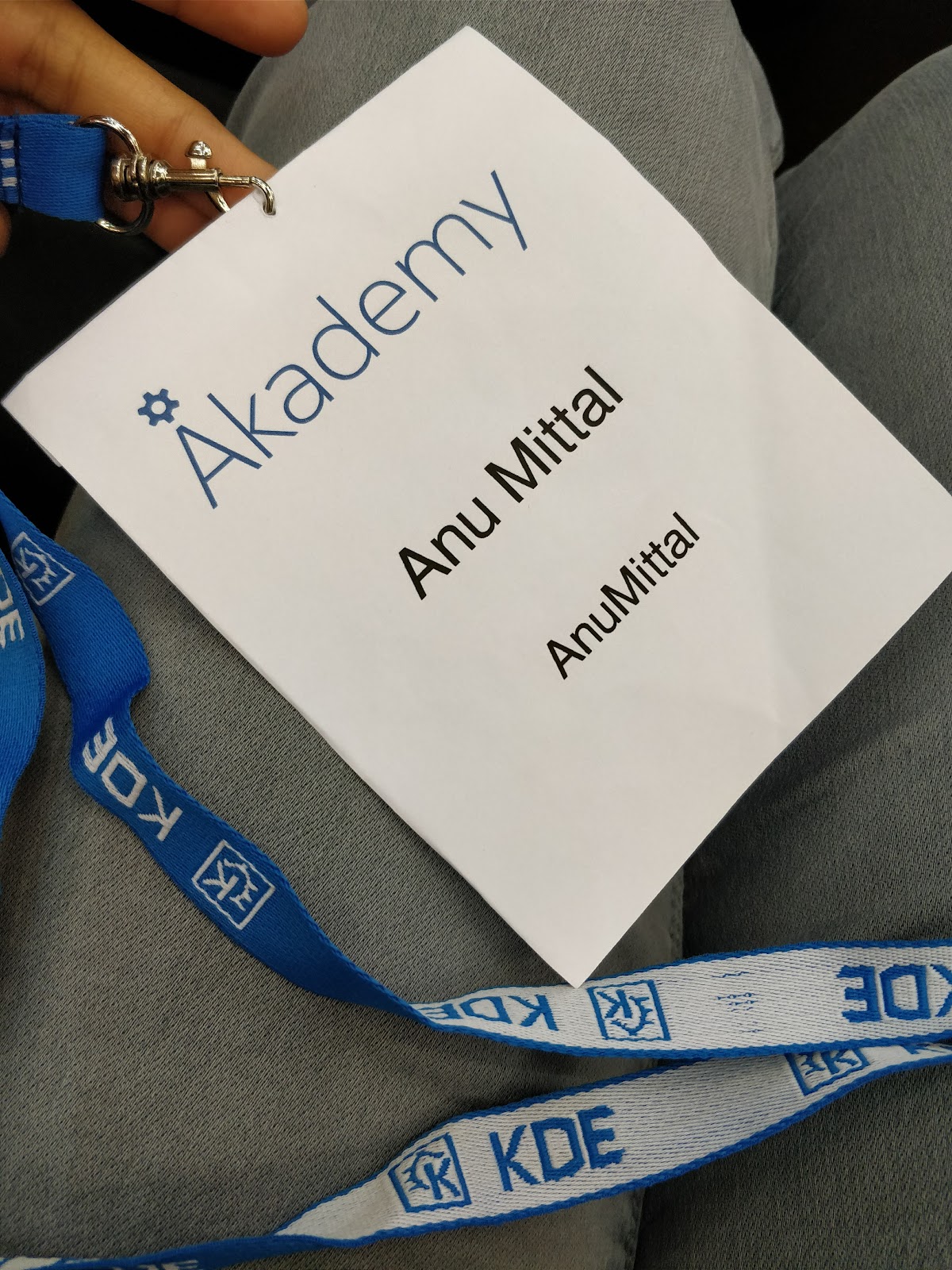
Akademy 2017 - A wonderful experience


Hola Amigos!
Akademy 2017 was such a great experience, that I would love to share with you all in this post.


For those who are unaware about Akademy, it’s an annual world summit of KDE (Please refer https://akademy.kde.org)
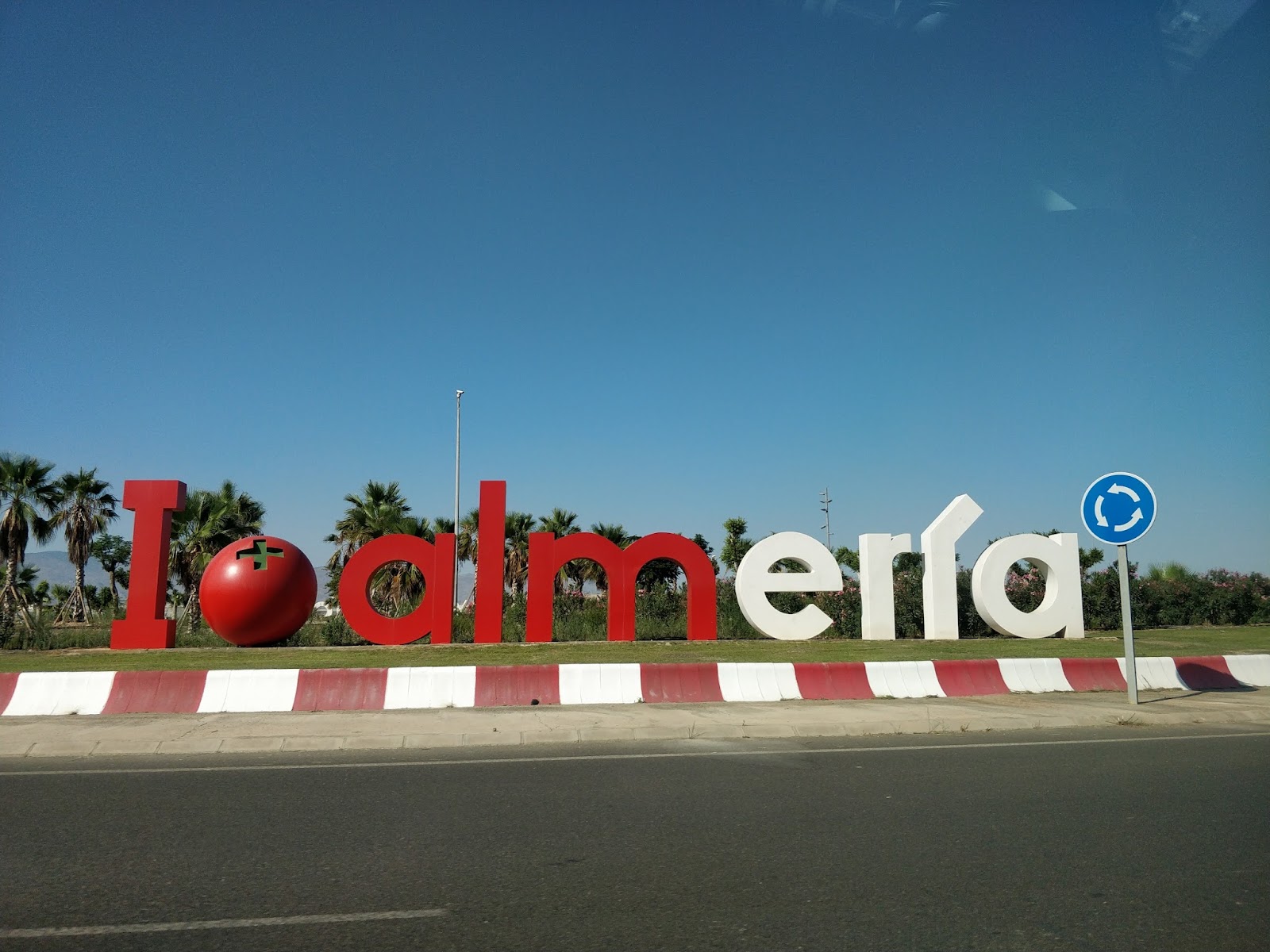
This year, Akademy was held in Almeria, Spain.

IMG_20170724_182219.jpg

It features a 2-day conference with presentations on the latest KDE developments, followed by 4 days of workshops, Birds of a Feather (BoF) and coding sessions.

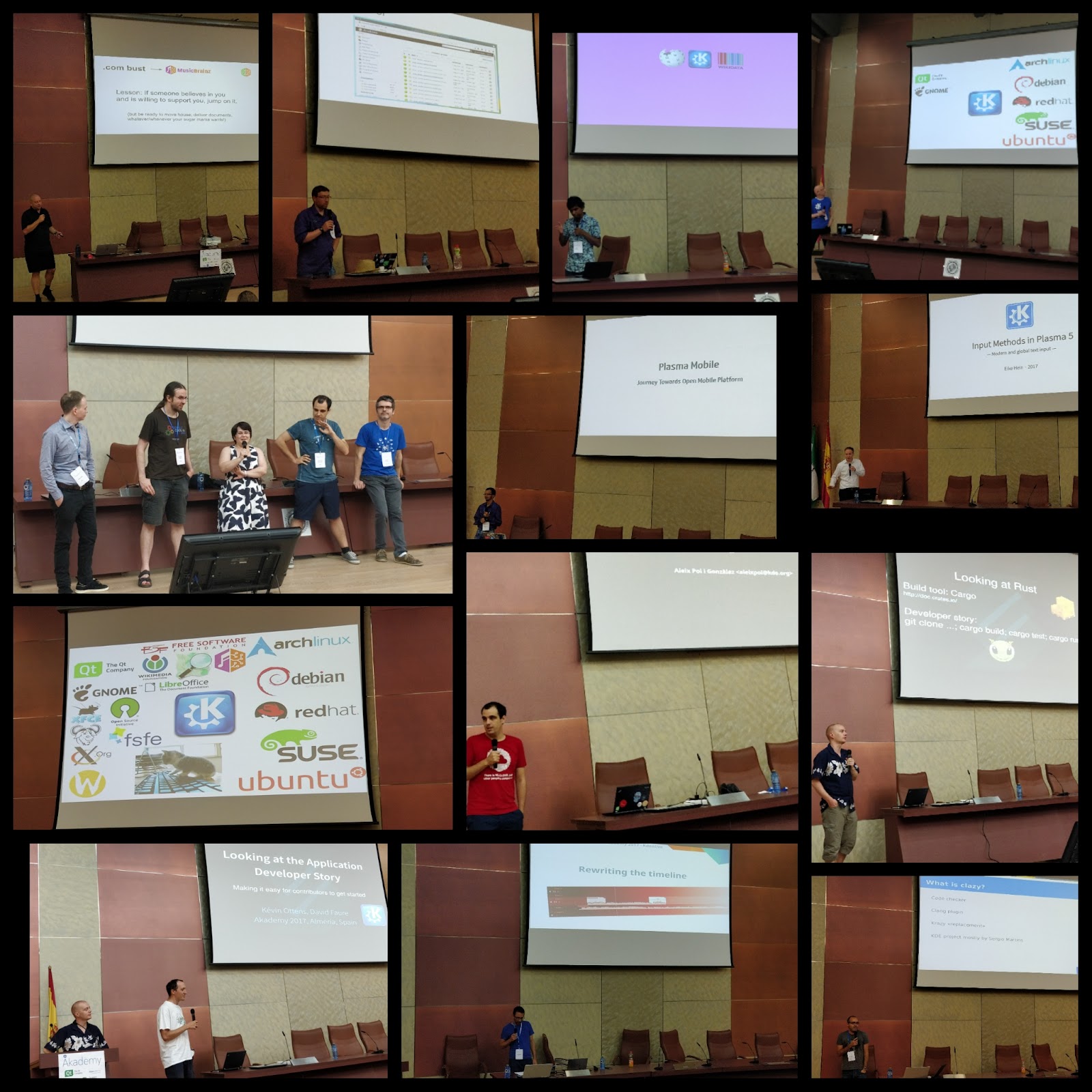
There are so many interesting talks given by some real tech enthusiasts, who are amiable and super cool. It is a great opportunity to meet people in person whom you have been communicating just knowing their IRC nickname.

So, as mentioned it started with some really interesting presentations on Plasma desktops, Plasma mobile, Ruqola, digiKam, WikiData, GCompris, KIO library, Calligra, KDE neon, Slimbook, Translating Challenges, and many more. We were fortunate to have Robert Kaye and Antonio Larrosa as our keynote speaker. These presentations were followed by BoF sessions and Workshops.

I conducted a workshop on Qt Quick Control 2, Paul Brown had some awesome stuff to share on what data should be visible to a viewer who visits your site or uses your product. Parallelly there was a BoF session, where the team brainstormed on Plasma mobile and Plasma vision.

[ https://twitter.com/anu22mittal ]

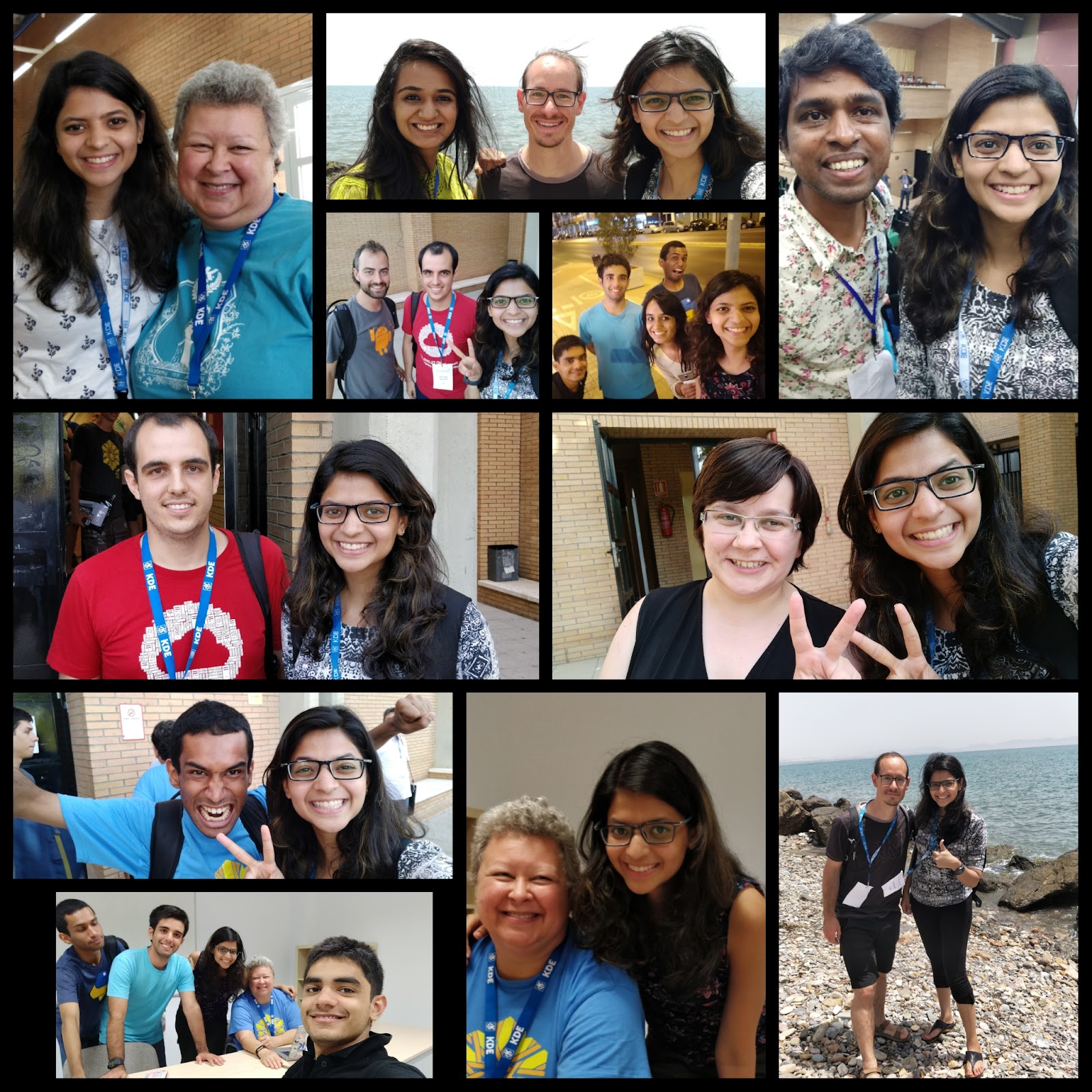
It was such pleasure to meet Valorie, Aleix Pol, Albert, Lydia, John Samuel, David, Timothee, Vasudha, Jonathan and so many more active contributes of KDE.

[Memories of Akademy 2017]

Now, How is KDE Akademy different than conf.kde.in?
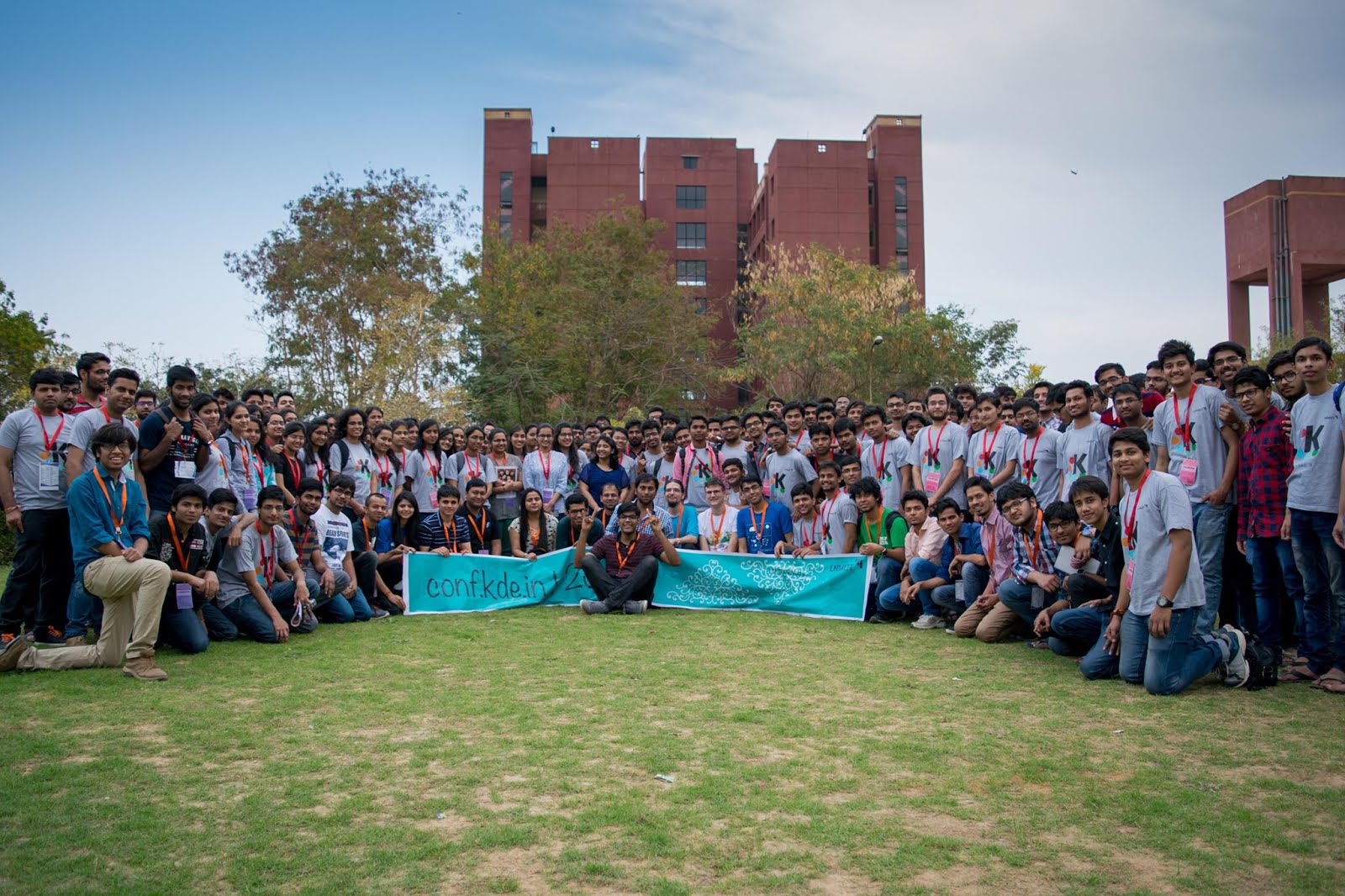
I have been a part of KDE India conference held in Jaipur in 2016 [conf.kde.in]. Which looked like this:

KDE.jpg

When you see this, you find so many students, keen to know about foss and KDE community.
All are budding developers with some spark and unexplored ideas in their mind. So such type of conference held by KDE in India help these unexplored ideas to come into execution by using and developing features in the various software build by KDE developers.

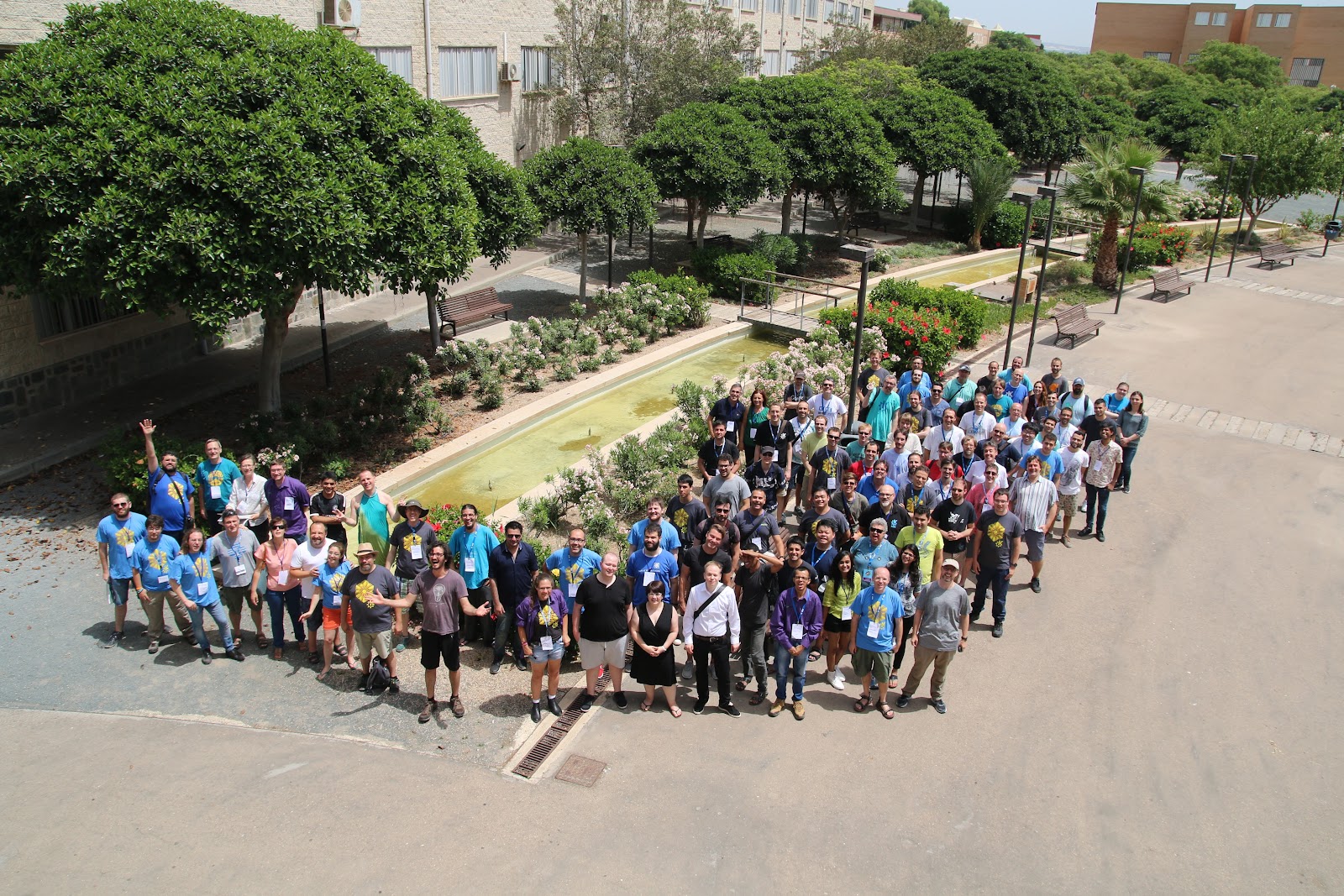
Where as when you look at these bunch of developers here in this picture:  

This is the group photograph of Akademy 2017 attendees. They are the backbone of all softwares in KDE.

I would like to thank KDE for giving me this opportunity. It has added great experience and wonderful memories to my journey of foss development


[Hostel, Food, Location @ Akadmey]
Also, guys please help make KDE apps and Plasma easier to use, more convenient and accessible. Support #Randa2017.  (To know more about Randa refer: https://dot.kde.org/2017/08/08/randa-meetings-2017-its-all-about-accessibility)

Tuesday, 11 July 2017

Akademy 2017


Hi all,

This blog is to assist participants attending the Conference Akademy 2017 at Almeria, Spain.
There will be a workshop titled "Playing with the amalgam of QML and JavaScript" conducted by me.
Timings: 10:30 - 12:15 on 24th July 2017.


Instructions for the participants:
  • The tutorial will only assume a basic knowledge of using Qt Creator [http://doc.qt.io/qtcreator/index.html].
  • No prior knowledge of QML is required, although it is suggested that attendees be familiar with the Objects and JavaScript.
  • We recommend that the attendees install the Qt Creator which includes Qt libraries and compatible compiler. Make sure you are able to build your first "Hello World" project successfully.
On a side note, please keep in mind of the following advise:
  • Although we do have access to the internet for all participants, it is always advised to carry a Data Card or Mobile Internet as a Backup.
  • Do carry power strip and bring your Laptop Fully charged.


Hope this workshop helps all the participants to get started with building their own QML-JS applications.

Monday, 19 June 2017

FOSSASIA SUMMIT 2017 and KDE


I got an opportunity to represent KDE in FOSSASIA 2017 held in mid-March at Science Center, Singapore. There were many communities showcasing their hardware, designs, graphics, and software.

 Science Center, Singapore
I talked about KDE, what it aims at, what are the various programs that KDE organizes to help budding developers, and how are these mentored. I walked through all the necessities to start contributing in KDE by introducing the audience to KDE Bugzilla, the IRCs channels, various application Domains, and the SoK(Season of KDE) proposal format. 


Then I shared my journey in KDE, briefed about my projects under Season of KDE and Google Summer of Code. The audience were really enthusiastic and curious to start contributing in KDE. I sincerely thank FOSSASIA for giving me this wonderful opportunity.

Overall working in KDE has been a very enriching experience. I wish to continue contributing in KDE and also share my experiences to help the budding developers to get started.

Friday, 26 August 2016

Winding up GSoC.

Time flies, truly. With the end of this month comes the end of such an amazing programme
"Google Summer of Code 2016".
As planned earlier I have successfully implemented GSL library to construct histogram for both static as well as dynamic input values.


Now, a user can
  • Draw different types of histogram for a given set of values.
  • Change the method of selecting the bin value.
  • Change background and filling of histogram graph.
  • Alter the properties of histogram graph scaling (auto-scale. color, pattern).
  • Mark the magnitude of bin ( individual or cumulative).
  • Draw/plot more than one curve on same worksheet to enhance the analytic study/comparison.
Though the programme has come to an end, I will continue contributing in KDE community and LabPlot. I would like to thank all my mentors in Labplot.
Working demo: https://www.youtube.com/watch?v=XHjYvmInXY

Thanks for reading :)

Thursday, 30 June 2016

Mid-term post.


Conquered one more phase. :) I have successfully completed GSoC mid-term evaluation!

My midterm evaluation target was to create a static histogram in Labplot with an option to add new histogram among the given types and set visible advanced settings.

I have added a new histogram dock widget containing the required settings options like selecting number of bins or type of histogram or the color of the plot and much more to be added eventually like settings of the boundary, it's color, style,etc.

My next task is to draw the histogram for any (static and dynamic) data set. It's time to implement everything that I have discussed and read about GSL libraries and QPainter.
Working on a large project like LabPlot is really engaging. A lot of work to be done in the coming up month. :)

Monday, 30 May 2016

Work peroid.


With the beginning of the coding period, I have set up all my accounts ,have read more about Qt5 and GSL libraries,had the discussion about the project with my mentor and finally done with the most boredom job, that is , taking university examinations.

I would not forget to share the goodies that I received last week. This cool diary, pen and sticker.


Now I am almost ready with the boilerplate code by adding new options to add a different type of histogram and a bar chart. My next step would be to add doc widget in the newly added option to include the advanced settings.


Saturday, 23 April 2016

Google Summer of Code,2016


So, finally, the wait is over. The result of GSoC selections is out and Voila! my proposal has been accepted and is now a GSoC project. I would like to thank KDE community, my mentor, and co-mentors for their support and giving me an opportunity to be a part of this programme. I will be working on the project LabPlot (KDEdu) which is a KDE-application for interactive graphing and analysis of scientific data. LabPlot provides an easy way to create, manage and edit plots.
Beginning with the first phase, 

Community bonding period (23rd April  to 22rd May)
I would complete the tasks picked earlier in the first week so that I can start working on my project then after. Discussing the complete flow and becoming more familiar with the code style, naming conventions, and project’s requirement will be the major tasks during this phase. Looking forward to an amazing coding summers. Cheers! Einstein: "Everything should be made as simple as possible, but not simpler."

Thursday, 10 March 2016

conf.KDE.in 2016, Jaipur


5th-6th March 2016:
Thank you KDE India for inviting us to share our experience with 250+ budding developers and spreading the knowledge we have acquired during our projects. It was beyond just a meetup, we made many new friends and also learnt a lot from each other. I would also like to thank LNMIIT for hosting such an amazing conference and for the flawless hospitality. The event was very well planned and executed. I hope the participants find all the talks and workshops effective and implement them someday.
Though the conference was of only two days but I was able to create hundreds of  memories as it was my first FOSS project, first talk, and my first ever meet up of such kind.All the speakers had something inspirational to the audience in their talk, who seem to be enthusiastic too, they had a keen interest in knowing more about things and asked many questions out of curiosity. The evening workshops were the most active session wherein the participants were demonstrated how to use KDE software and implement Git commands.And after the day's activity, the chit-chat sessions at the dinner table were the best part where we were able to know more about each other as how each of us worked on innovative ideas and made through it. At the end of the conference director of LNMIIT presented each of us with a beautiful momento.
It was an unforgettable experience.I got to learn lots of things from this conference. I would like to thank each and every person connected with this conference for making it so special and would like to encourage all of my blog readers to participate in such events and contribute to FOSS projects. These are few things you cannot afford to miss. All you need is  1.) interest 2.) idea 3.) amazing organization like KDE and bang! You are almost there.
Good Luck! ;)


Tuesday, 23 February 2016

Learning GIT.

Follow http://rogerdudler.github.io/git-guide/ in order to get familiarized with the basics of git commands in the easiest manner.

In order to know more about version control and history of git you can go through
https://git-scm.com/book/en/v1/Getting-Started 


Git allows more than one person to safely work on the same project without interfering with each other's work.

Implement these commands by first creating an account on https://github.com/ and pushing any of your own projects.You can then play with commands, just make sure you are not messing up with the master branch. :D


Video tutorials : https://git-scm.com/videos

Good Luck and keep sharing your code ;) 


Friday, 16 January 2015

January- Time to pull up my socks.

I have successfully generated CMake Configuration and have added the code to the kde review board (https://git.reviewboard.kde.org/r/121758/) , corrections asked were made accordingly. Now finally the main task is to port all .cpp files, which i have been working on for a while.
Initially got stuck at few places and also had my university examination going on due to which there was a fall in my contribution but now as i am through all these, it's time to gear up the application porting task under the guidance of my mentor.
Hoping for a good luck.

Monday, 8 December 2014

And December begins -Sok 2014

The very first step for porting application to kf5 is to port first the root CMakeLists.txt files and for that my mentor suggested first to learn about CMake,which has been very helpful .
I have asked for developers access at KDE TechBase so that i can share my code on KDE Repositories, waiting for the acceptance and soon will start updating files there.

Wednesday, 26 November 2014

Beginning of SoK-2014

An interesting start to the coding session,setting up all the software required and getting acquainted with the amazing language being used. Now its time to study the code of the existing version of application and finding out the key areas to be updated and learning the porting process with the help of mentor assigned to me.Hoping for a great winter.!